


“The Earth is Our Common Home”

PRESS RELEASE
Nordic Bishops: “The Earth is our common home”
Publication of Pastoral Letter on Migration and Integration
Trondheim/Copenhagen
The Catholic bishops of the Nordic countries published a joint pastoral letter on migration and integration on Sunday. It is entitled “The Earth is our common home”. They call for compassion, understanding and objectivity in public debate.
Migration in the Bible
The bishops remind readers that migration has shaped all periods of human history. Jesus Christ also came as a “migrant from heaven to earth” and had to seek refuge in Egypt as a child. The right to live in security is a fundamental human right. At the same time, the bishops emphasize the responsibility of migrants to respect the laws and cultural values of their host country and to participate in its society.
Bridges instead of walls
The bishops express concern about the growing isolationism in Europe. While each country must assess its own capacity to receive and integrate refugees, they warn against narrow-minded nationalism and the expulsion of well-adapted individuals. Successful integration requires overcoming self-isolation and avoiding forced integration. They also urge that the debate on migration be free from aggression and control.
Parishes as places of gathering
The bishops see Catholic parishes in the North as places of vibrant integration and cultural diversity. Their appeal: Christians must not turn away people in need, but must be ready to help despite limited resources.
For more information: www.nordicbishopsconference.org
Pastoral Letter on Migration from the Nordic Bishops
25.10.2026
Dear Brothers and Sisters,
When God sent his Son into the world, he came as a migrant from heaven to earth. There was no room for him at the inn, only a poor manger among the animals. Hardly had he been born when people wanted to kill him, and he had to flee to Egypt. When God became man, he shared from the beginning the difficult fate that countless migrants throughout history have experienced.
In the Old Testament, we see how the people of Israel repeatedly had to seek refuge elsewhere or were forced into exile. Ever since then, God’s people has been a people on the move, on a pilgrimage toward God’s eternal kingdom. We have no permanent dwelling on earth.
At the same time, we are called to make ourselves at home where we live and to make the best of our earthly existence. Our final homeland is in heaven, but we must nonetheless build a just and good society where providence has placed us, doing our best to live together in solidarity and mutual care.
Every human being has the right to live a good, peaceful life. In our time, migration has often become a source of conflict leading to polarisation. Through her social teaching, the Church helps us find good solutions, encouraging people of good will to work together on this important issue, which belongs to the perennial history of mankind. Migration has occurred in all periods, in all parts of the world. The earth is our common home, where all people are entitled to find a place to live.
Migrants may unsettle us. They can also contribute to the good of the nations in which they settle. Whether they had to leave their own countries on account of famine, war, or persecution or whether they set out freely in search of a better life, migrants can be carriers of valuable insight, energy, and skills. They can come bringing resources that our own countries presently fail to generate.
In Antiquity, the Christian faith spread throughout the Roman Empire through missionaries and migrants who bore witness to their faith wherever they went. From Christianised Europe, the Good News later spread throughout the world.
More recently, the Catholic Church was rebuilt, after the centuries of persecution, in our Nordic countries by migrants who brought their Catholic faith to us. Priests and religious sisters from different parts of the world have, with selfless dedication, contributed to building up the Church throughout Northern Europe.
Migration has potential to lead to difficulties. Migrants must be carefully integrated into their new countries; otherwise, serious problems arise. Those who come from other cultures must be helped to grow into their new country. The Church teaches that migrants are ‘obliged to respect with gratitude the material and spiritual heritage of the country that receives them, to obey its laws and to assist in carrying civic burdens.’[i] This contribution must not be seen to exclude their legitimate right to preserve their own heritage.
There is a risk that migrants isolate themselves and fail even to attempt to adapt to their new circumstances. Over time, this tendency generates unease and conflict. Migrants are to be encouraged to integrate but not subjected to forced assimilation. Finding this balance is not always easy, but it is vital for the future of our countries.
Many European countries are increasingly closing their borders. Our time tends to build walls rather than bridges between peoples and countries. Each country naturally needs to assess how many migrants it is able to receive. When this does not happen, and when more people are received than can be integrated well, social problems result. These in turn lead to new strictures in policy, so that it becomes near impossible to enter within our borders even for refugees and asylum seekers, who stand under the protection of international norms to which our countries are obliged.
In some cases, this development has reached the point where it is considered good to send away as many people as possible, including those who are well integrated and who make significant contributions to our societies.
The Church must raise her voice in defense of those who are in danger of being subjected to unjust treatment without due cause.
Our Catholic parishes often function as integration workshop, where migrants are welcomed with love and respect and where they can learn how to live harmoniously in their nation of adoption. Our dioceses are melting-pots where cultures meet. Masses and catechesis are proposed in a range of languages. Practical assistance is given to help newcomers find their way through an unknown bureaucracy and unfamiliar social norms.
In these ways, migrants who join our communities learn how to live out their Catholic faith in their new country. They learn how to contribute to building up the local Church. Once they have become part of a parish, it becomes easier to grow into the wider society and to contribute to it through their own life experience and commitment.
Nordic culture has, throughout the centuries, been enriched by people from all over the world who have been welcomed among us and have become part of our society. It is our prayer and hope that this will continue to be the case.
To foster love of one’s nation, to value its traditions and heritage, is a good thing. Narrow-minded nationalism, however, must be abhorrent to Catholics and to all people of good will. Pope Leo XIV calls upon all of us to work for a world in which people of different cultures and religions can live together in peace, cooperation, and solidarity. He has visited places such as the Canary Islands[ii] and Lampedusa[iii] and to appeal for help for those who have been forced to flee to another and safer country.
Again and again, the Holy Father calls on us, too, to disarm our language.[iv] He asks us to be careful about the way in which we speak about each other, to avoid rhetorical excess. We remind ourselves and all of you of this point. We find nowadays that public coverage of and discourse about immigration tend to become harsher, less nuanced, and more aggressive. This can turn into a form of manipulation we have to resist.
As Christians, we cannot close our hearts to the defenceless and vulnerable people who turn up on our doorstep. We must recognise Jesus in the person in need who counts on us for help. Europe is searching for a new balance in this area. We must be realistic about our limitations, human and material. Still, we must be ready never to reject a suffering brother or sister who calls on us for help.
We, the bishops of the Nordic countries, thank all those who have come to our countries from abroad and who, in various ways, have contributed valiantly to the development of our Church and society. We pray for our countries that they may continue to welcome people who, in communion with all of us, are prepared to work for a world in which all can live in peace and justice, reconciliation and unity.
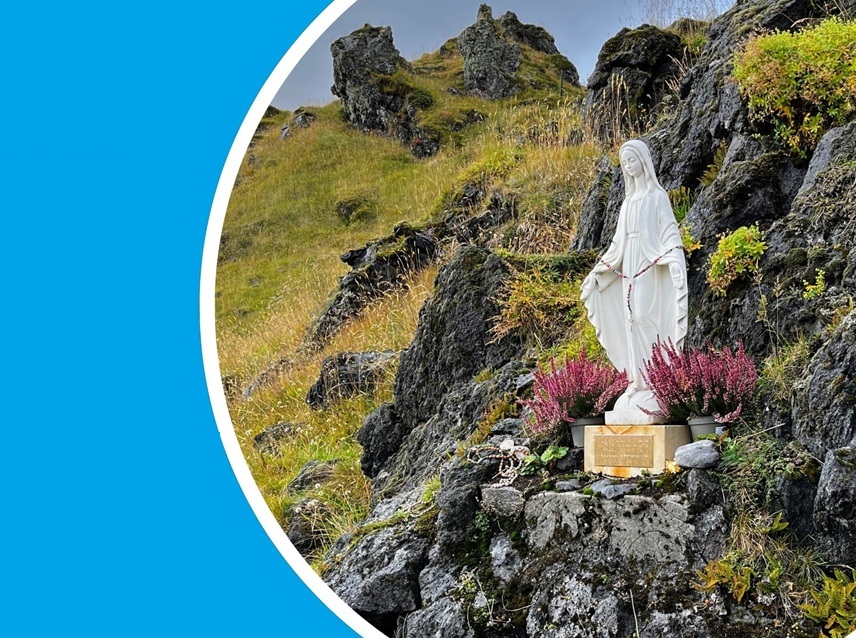
We place our countries under the protection of the Immaculate Virgin Mary — the ‘Mother of Migrants’ as we pray in the litany. We ask for her intercession, that we may ever more faithfully follow Jesus Christ in his love for the poor and vulnerable.
+Erik Varden OSCO, Trondheim, Tromsø – Præses
+Anders Cardinal Arborelius OCD, Stockholm
+Czeslaw Kozon, København
+David Tencer OFMCap, Reykjavik
+Raimo Goyarrola, Helsinki
+Fredrik Hansen, Oslo
—————————————————–
[i] ‘The more prosperous nations are obliged, to the extent they are able, to welcome the foreigner in search of the security and the means of livelihood which he cannot find in his country of origin. Public authorities should see to it that the natural right is respected that places a guest under the protection of those who receive him. Political authorities, for the sake of the common good for which they are responsible, may make the exercise of the right to immigrate subject to various juridical conditions, especially with regard to the immigrants’ duties toward their country of adoption. Immigrants are obliged to respect with gratitude the material and spiritual heritage of the country that receives them, to obey its laws and to assist in carrying civic burdens.’ Catechism of the Catholic Church, par. 2241.
[ii] ‘Dear migrants, before saying anything else to you, I want to bow before your dignity. You are not just numbers or files. You are people who have left behind families and homes. You have dreams that no one has the right to despise. However, I also want to tell you that your lives must be protected. Do not surrender your lives to those who trade with them. Do not believe those who promise easy paradises in exchange for your body, money, silence or freedom. Those false promises are “siren songs”; they are industries of death. This tragedy must serve as an appeal to the conscience of the nations of origin of the migrants, which must establish conditions for peace, justice and development. It is also an appeal to the conscience of the transit nations, which are called to protect the vulnerable and not leave them in the hands of criminal networks. It is likewise an appeal to the conscience of Europe, which cannot claim to uphold human dignity while growing accustomed to the Mediterranean and the Atlantic becoming unmarked graves, as well as that of the international community, which is called to effective and persevering cooperation. The Church, too, must allow herself to be challenged. Welcoming migrants cannot be a secondary matter that is left to a few volunteers. We kneel before the altar to adore Christ present in the Eucharist, from whom we receive the strength and the motivation to live charity; for this reason, we cannot then “pass by” the small boats and rafts, for all service and every commitment spring from prayer and lead back to it.’ Address at Las Palmas de Gran Canaria on 11 June 2026.
[iii] ‘There is no love of God without love of neighbour, and there is no neighbour if I do not draw near. To pause, to be moved, to bend down, to weep before another’s pain — as Jesus did — means entering into the dynamic of love, the very movement in which God has revealed himself.My dear friends, those who allow themselves to be drawn into this dynamic of compassion and mercy begin to live differently, to be citizens in a different way and to work differently. Then the civilisation of love — the one envisioned by my holy predecessors John XXIII, Paul VI and John Paul II — can truly emerge. Together with a great number of prophets and martyrs of the last century, they understood that only mercy can respond to the depths of the human heart and the horrors of war by opening the way to a new beginning. Now, standing on the shoulders of these giants, we have entered a millennium in which we must give spiritual, cultural, legal, political and economic expression to the civilisation of love. May the enormity of the suffering we witness help us grasp the radical nature of this call.’ Homily given at Lampedusa on 4 July 2026.
[iv] ‘The first contribution we can make toward a more humane civilisation is to be mindful of our words. “Let us disarm words and we will help to disarm the world.” Words have enormous power, something we experience in our daily interactions; for example, spoken words can change our mood for better or for worse. “Peace begins with each one of us: in the way we look at others, listen to others and speak about others. In this sense, the way we communicate is of fundamental importance: we must say ‘no’ to the war of words and images, we must reject the paradigm of war.” We must all, therefore, examine our conscience regarding the words we use, the prejudices we have and the explicit or implicit aggression that lies within them. We have a real opportunity to contribute to the common good each time we speak the truth, offer wise advice, support those in need of comfort, denounce injustice and give a voice to the voiceless.’ Magnifica Humanitas, par. 214.
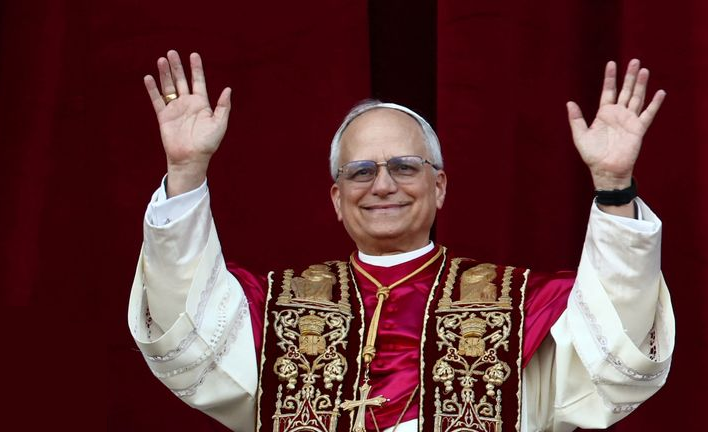
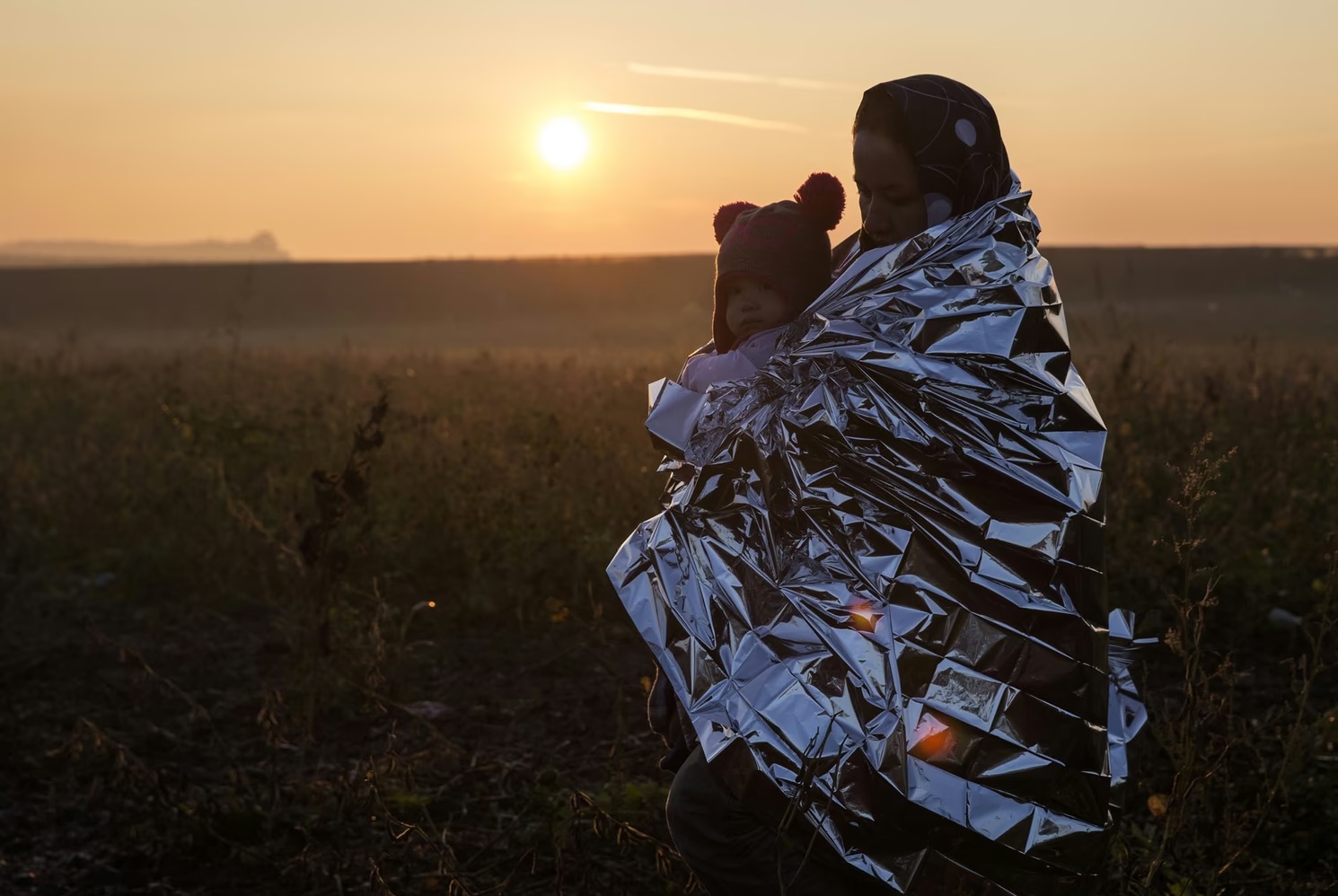
Photo: Marko Djurica REUTERS